

This fictional case follows a team preparing a rubber seal for a compact pump assembly. There is no named customer or claimed performance result: the example focuses on the information exchanged during development. Its starting point is a simple question about how to make a sample review more useful.
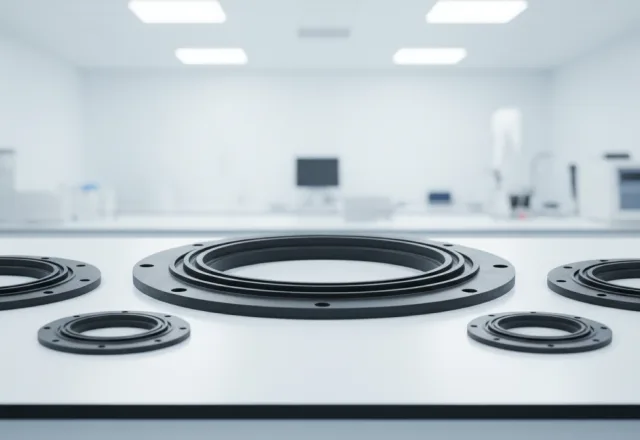
Understand the assembly before the part
The example team starts by reviewing the complete assembly. Looking at the surrounding components helps the participants describe the seal's role and identify the details that deserve attention in the first sample discussion.
Map the contact surfaces
Mark where the seal meets the housing and cover, and include the relevant drawing views. Explain the order in which the parts are assembled. This gives the supplier a clearer picture than an isolated outline with no indication of the mating components.
List the operating questions
The project brief records the intended service environment and asks the responsible engineer to confirm any missing conditions. Unknown values stay visible as questions. The team avoids turning an assumption from the first discussion into a requirement that nobody has actually approved.
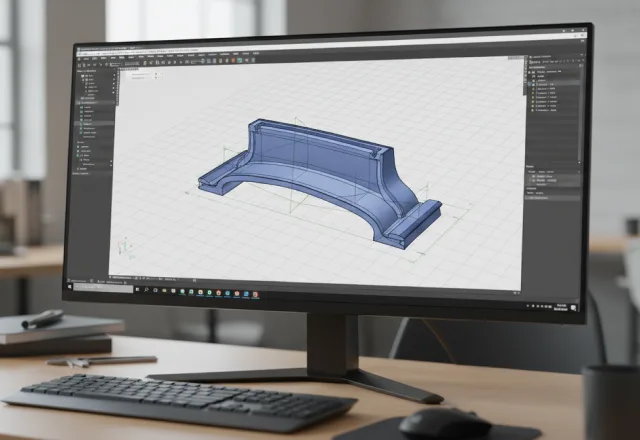
Build a focused sample review
For the first iteration, the team agrees on a limited set of questions. This keeps the discussion specific and ensures that the people handling the sample know which observations are needed for the next design decision.
Observe the installation sequence
Record how the sample is positioned and what happens at each assembly step. Photograph any area that needs closer review and identify the sample used. These notes help the design team discuss the observation without confusing it with feedback from a different iteration.
Compare feedback against the drawing
Locate each comment on the current drawing and distinguish a drawing question from an assembly question. If a change is proposed, describe the intended effect before requesting a new sample. That gives both teams a shared explanation of what the next iteration should address.
Document the next decision
The fictional review ends with a record of the work still required. The purpose is to show a clear development process, not to imply that a demonstration sample has passed a particular application test.
Track unresolved observations
Keep each open item in a short issue list with an owner and an expected response. Attach supporting images to the relevant item. If additional information is needed from the assembly designer, request it explicitly instead of continuing with an unrecorded assumption.
Define the next sample package
List the revised drawing, the sample identifiers and the questions for the next review. Include the earlier observations for comparison. This gives the receiving team a complete package and makes it clear which decisions are being revisited and which remain unchanged.